
February 8, 2026
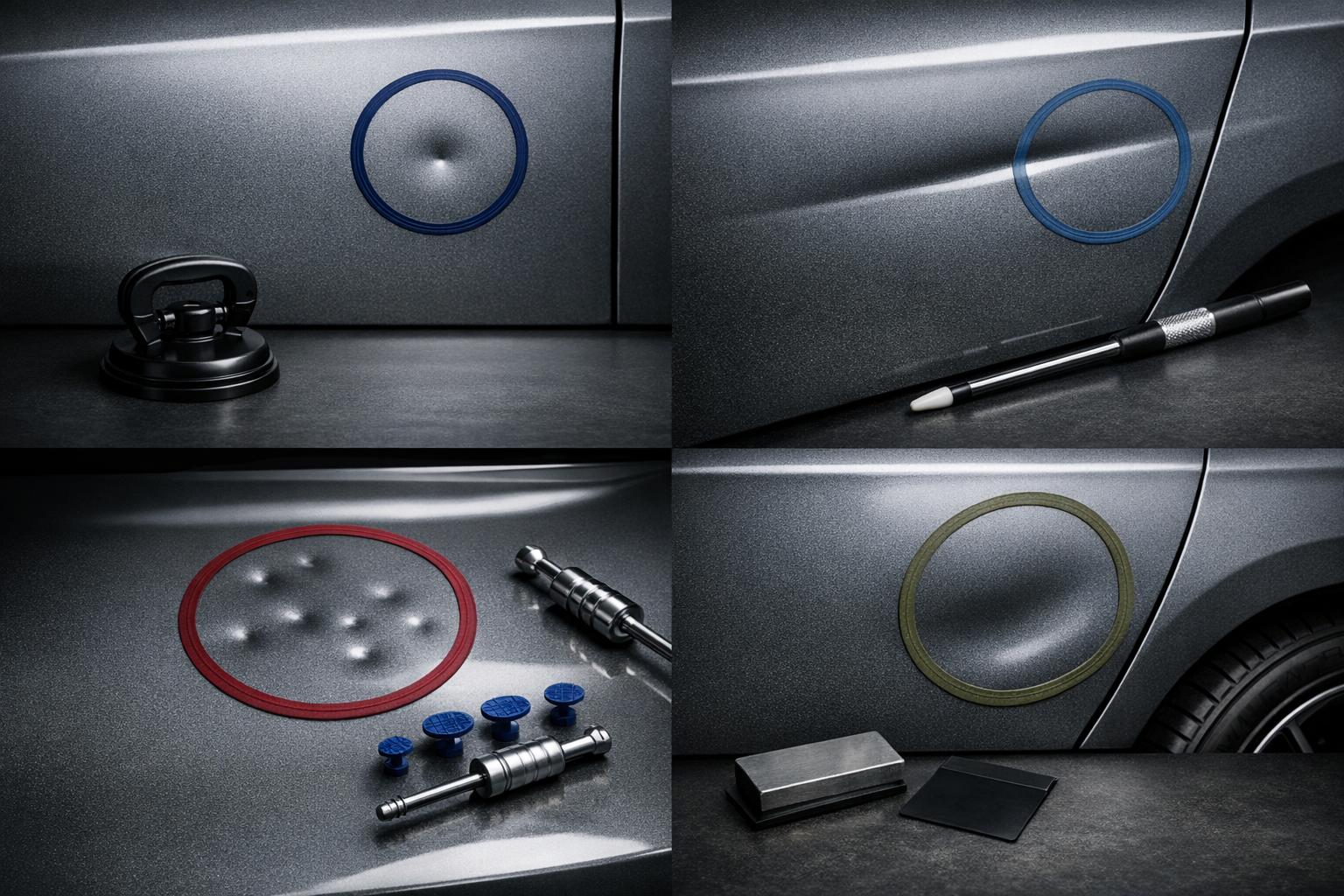
Every car owner knows the frustration of dents - whether from hail, shopping carts, or minor accidents. They’re more than just cosmetic issues; dents can lead to rust, impact resale value, and even interfere with sensors in modern vehicles. The good news? Many dents are repairable, often affordably, if addressed promptly.
Here’s a quick breakdown of common dent types and their fixes:
For minor, shallow dents, DIY methods or PDR work well. However, deeper or paint-damaged dents usually need professional attention. Acting quickly prevents further damage and saves money.

Car Dent Types and Repair Costs Comparison Guide
Understanding the type of dent on your car is an important first step in figuring out the best way to repair it. Below, we’ll cover the most common types of dents, what causes them, and how they’re typically repaired.
These dents are shallow, circular marks that often appear on the hood, roof, or trunk. They’re usually between 3 and 5 inches in diameter and are caused by round objects like hail, golf balls, or baseballs. To give you an idea, hailstones need to be about 1.75 inches wide - roughly the size of a golf ball - to leave a dent on your car. Since the paint usually remains intact and the metal isn’t overly stretched, these dents are ideal for Paintless Dent Repair (PDR), which typically costs between $50 and $150.
Crease dents look like long, folded lines or ridges on your car’s surface. These occur when something like a bicycle handlebar, tree branch, or car door edge scrapes along the side of your car. The impact stretches the metal and often cracks the paint, making repairs more complicated. If left untreated, the metal can lose its original form, making it weaker and more prone to future damage. These dents are harder to fix, and repair methods often depend on the extent of the damage.
Collision dents are the result of severe impacts, such as car accidents or falling objects. These dents are often deep, irregularly shaped, and accompanied by cracked or missing paint, which increases the risk of rust. What makes these dents even trickier is that they can hide internal structural damage. Because of this, a professional collision repair inspection is always a good idea. Repair costs for collision dents can range from $300 to over $2,000, depending on the severity.
These dents are characterized by multiple small impact points with no clear pattern. They’re most commonly caused by hailstorms or multi-car collisions. Their irregular nature requires specialized tools and techniques to restore the metal’s original shape. For widespread hail damage, professional PDR can cost anywhere from $150 to $500.
These dents occur on the plastic bumpers of the car, typically from low-speed impacts like backing into a post or minor fender benders in parking lots. They appear as large depressions and, because plastic is flexible, can often be fixed at home. One popular DIY method involves softening the plastic with boiling water and pushing the dent out from the inside. This approach costs around $20 to $40, far less than replacing the bumper, which can exceed $1,000.
Here’s a quick reference table summarizing the different dent types, their causes, and repair costs:
| Dent Type | Appearance | Common Causes | Typical Repair Cost |
|---|---|---|---|
| Round | Circular, shallow | Hail, sports balls, baseballs | $50–$150 (PDR) |
| Crease | Long fold or ridge | Branches, dragging objects | $75–$300+ |
| Collision | Large, irregular, deep | Accidents, heavy impacts | $300–$2,000+ |
| Multi-Point | Multiple small impacts | Hailstorms, multi-car collisions | $150–$500 |
| Bumper | Large depressions in plastic | Low-speed impacts, backing up | $20–$40 (DIY) |
When dealing with dents, selecting the right repair method is crucial for getting the best results without overspending. Each method has its own advantages, drawbacks, and price points. The primary options include Paintless Dent Repair (PDR), traditional dent repair, and filler and touch-up methods. The choice depends on the dent's severity, whether the paint is intact, and your budget.
PDR involves using specialized tools like rods and picks to massage dents out from behind the panel. Its standout benefit? It keeps your car's original factory paint intact, which is great for maintaining resale value. This method is ideal for small-to-medium dents - think hail damage, door dings, or shallow creases - provided the paint hasn’t been damaged.
Here’s a real-world example: In November 2024, National Dent Repair shared a case from Nashville where a driver faced a 2-inch door ding. A traditional body shop estimated $500 for repainting and labor, with a turnaround of 2–3 days. Instead, the owner chose PDR, which restored the panel in under an hour for just $150.
PDR is quick and affordable, with most jobs costing $75–$150 and more complex ones reaching up to $500. It’s also considered more eco-friendly. However, it’s not a fix-all. If the paint is cracked or the metal is stretched, PDR won’t work. As Wikipedia explains:
"PDR does not replace a traditional body repair shop. Factors such as paint damage, stretched metal or an already re-painted panel can inhibit the success of a PDR repair".
When PDR isn’t an option, traditional repair methods are the reliable fallback.
Traditional dent repair is the go-to for more severe damage. This process involves sanding the damaged area, applying body filler (like Bondo), and repainting the surface. It’s essential for issues like cracked paint, deep creases, or structural damage from collisions.
For example, a Nashville SUV with cracked paint required traditional repair, costing $600 and taking significantly longer than PDR. These repairs typically start at $500 and can exceed $2,000 for major damage, often taking several days or even a week to complete.
One downside of traditional repairs is that they use non-factory paint, which can sometimes lead to slight color mismatches or visible sanding marks, potentially affecting resale value. Despite these drawbacks, it’s the only reliable solution for deep dents, extensive damage, or compromised paint.
For minor cosmetic issues, filler methods offer a quick and inexpensive fix. This approach uses putty (like Bondo) to fill dents, followed by sanding and painting to create a smooth finish. It’s often used when the metal can’t be perfectly reshaped or when there’s minor paint damage. DIY kits range from $40–$99, and body filler materials can cost as little as $13.
While filler methods are budget-friendly and good for hiding imperfections, they’re not a long-term solution. If applied too thickly - especially on dents deeper than 1/4 inch - filler can crack over time and trap moisture, leading to hidden rust. Haynes Manuals advises:
"Body filler is only meant to be used to fill and smooth the area after the metal is as close to normal as possible".
To ensure durability, filler should only be used sparingly and after reshaping the metal as much as possible.
Here’s a side-by-side comparison of the three methods:
| Method | Best For | Cost Range | Timeframe | Key Advantage | Main Limitation |
|---|---|---|---|---|---|
| Paintless Dent Repair (PDR) | Hail damage, door dings, shallow creases (no paint damage) | $75–$500 | Hours (often same-day) | Preserves factory paint | Can’t fix cracked paint or stretched metal |
| Traditional Dent Repair | Collision damage, deep creases, paint damage | $500–$2,000+ | Several days to a week+ | Fixes structural damage | Expensive; involves non-factory paint |
| Filler & Touch-Up | Minor cosmetic blemishes, shallow dents | $13–$99 (DIY) | Hours to days | Inexpensive; hides imperfections | Temporary; can crack if applied too thick |
After reviewing various repair methods, it's important to know when it's time to bring in professionals. Not all dents can be fixed with DIY techniques - larger or more complicated damage often requires expert attention to avoid making things worse.
At 1st Choice Collision, you’ll find a team of experts who deliver high-quality repairs backed by a lifetime nationwide guarantee. Their technicians are trained to handle all types of materials, including aluminum, and can assess whether structural repairs are necessary to ensure your vehicle remains safe.
Whether you need paintless dent repair to maintain your factory finish or a full body shop service involving sanding and repainting, they’ve got you covered. They also specialize in collision repair, custom auto paint, and automotive glass replacement, making them a one-stop shop for all your vehicle repair needs.
Getting your car repaired at a certified center like 1st Choice Collision not only restores it to its original condition but also helps maintain its resale value and warranty. Visit 1st Choice Collision to schedule an assessment and get your car looking as good as new.
Choosing the right repair method depends on the type of dent and your vehicle's overall safety. Small, shallow dents with intact paint can often be addressed with DIY solutions or paintless dent repair. However, deeper creases, larger impacts, or damage involving cracked paint typically require professional attention. The location of the dent also plays a crucial role - damage near body lines, sensors, or reinforced areas often needs specialized tools and expertise that go beyond what home kits can provide.
Timely repairs are key to protecting your car’s value. Ignoring dents can lead to rust and paint flaking, which only get worse with time. Professional repair centers don’t just restore your car’s appearance; they also identify hidden structural damage or compromised safety sensors that might not be visible at first glance.
When DIY methods fall short, professional expertise is the way to go. At 1st Choice Collision, you’ll find skilled technicians ready to handle everything from paintless dent repair to full collision restoration. They offer a lifetime nationwide guarantee, ensuring lasting results. Whether it’s a small door ding or significant damage from an accident, their team will restore your car’s safety, appearance, and resale value. Visit 1st Choice Collision to schedule an assessment and get your vehicle back in top shape.
The best way to fix a small, round dent on your car is through Paintless Dent Repair (PDR). This technique is ideal for minor dents where the paint remains intact. It’s a fast and affordable option that restores your car’s appearance without requiring major bodywork.
For top-notch results, you might want to check out a reliable repair center like 1st Choice Collision. Their team is skilled in PDR and offers repairs backed by a lifetime nationwide guarantee.
If the dent on your car is deep, has paint damage, or affects a body line or crease, it's a good idea to seek out professional dent repair. These types of damage often require precise reshaping and specialized tools to restore the vehicle properly. Dents from collisions or those on complex surfaces are especially tricky and best handled by experts.
Smaller, shallow dents - like those caused by hail or minor bumps - might be manageable with DIY methods. However, trying to fix larger or more intricate dents on your own can sometimes make things worse. To protect your car's value and ensure the repair is done right, it's usually smarter to leave the more challenging jobs to trained professionals.
To keep rust at bay after a dent repair, it's crucial to make sure the damaged area is sealed and protected properly. When repairs involve exposed metal or chipped paint, moisture and road salt can sneak in, eventually causing rust. The solution? Sand the area, fill any gaps, and repaint it to restore the protective barrier.
Once the repairs are done, adding a layer of protective wax or sealant can provide extra defense against moisture and other environmental factors. Regular upkeep, like washing and waxing, is also essential. This helps remove dirt, salt, and debris that speed up rusting - especially during winter or in coastal regions. For peace of mind and long-lasting protection, professional repair services can ensure the paint and metal are thoroughly protected, minimizing the chance of rust down the road.