
February 1, 2026
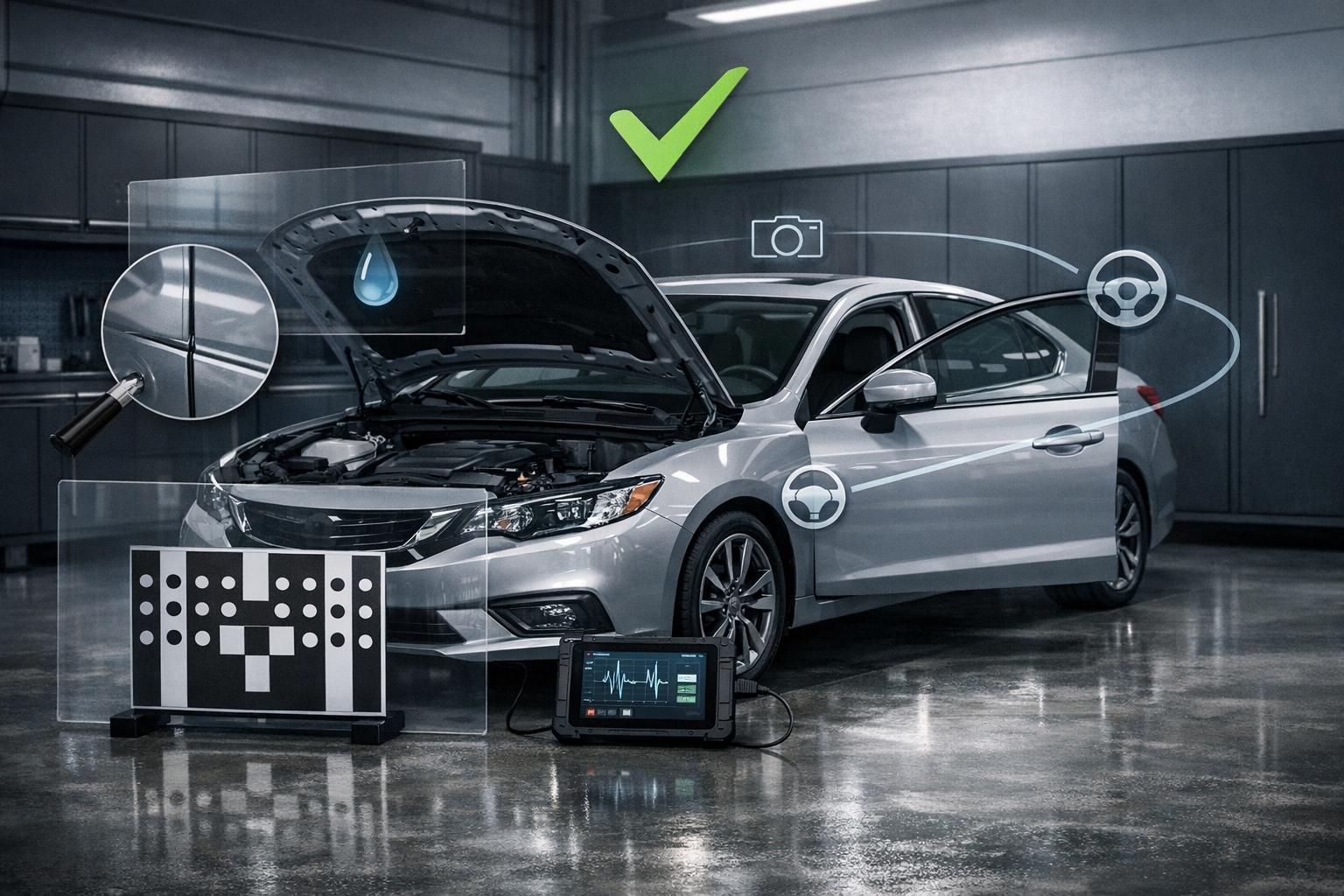
When your car comes back from a repair shop, it’s important to confirm that everything is working properly - not just the visible fixes. Post-repair testing ensures your vehicle is safe, reliable, and meets original standards. Here's what you need to know:
Thorough testing not only ensures safety but also prevents warranty disputes and maintains your car’s value. By following these steps, you can confidently confirm that your vehicle is ready for the road.

5-Step Post-Repair Vehicle Testing Process
Before starting your car, take a moment to visually inspect it. This step can help you spot potential issues that might cause trouble once the engine is running. Always do this when the engine is cool to avoid burns and ensure accurate readings. Begin by checking fluid levels and looking for leaks to confirm that all systems are sealed and operating properly.
Start by examining all fluid levels using dipsticks or reservoir sight glasses. Here's what to look for:
Next, inspect for leaks in these areas:
Gently squeeze hoses - they should feel soft and flexible, not brittle or hardened. Ensure all filler caps are present and securely tightened to prevent contamination. Once you've completed these checks, move on to the vehicle's external and mechanical components.
After fluids, inspect the physical condition of the car. Confirm that all components meet repair standards:
"Proper alignment is crucial not only for aesthetic reasons but also for maintaining the structural integrity of your vehicle." - Stonewall Collision & Auto Paint
Check the steering wheel for free play; it shouldn't move more than 2 inches at the rim. Inspect suspension components for missing or broken leaves in springs, ensuring they don't touch the tire, rim, or frame.
Once you've confirmed the car's external and mechanical integrity, test the interior systems to ensure everything is functioning safely:
Also, test the horn, power windows, and other switches. Press the accelerator to ensure smooth operation and that it returns to idle immediately. Watch for warning lights on the dashboard - new Check Engine, ABS, or Airbag lights could indicate unresolved problems. Finally, pay attention to odors: a moldy smell might mean water leaks, while a strong coolant odor could suggest a heater core issue.
Once you've completed the visual inspection, it’s time to start the engine and assess its performance while stationary. This step can uncover issues that aren’t apparent when the car is off - like fluid leaks under pressure, electrical charging problems, or cooling system malfunctions. Before turning the key, connect an OBD-II scanner and clear all fault codes to establish a clean slate for testing.
Start the vehicle in either Park or Neutral, making sure the parking brake is engaged. Pay close attention to the dashboard - engine oil pressure should quickly reach the normal range after startup. If it doesn’t, shut the engine off and investigate immediately. Use your scan tool to monitor On Board System Readiness (OSR) and confirm that the system’s continuous monitors are actively assessing engine performance. This approach ensures a smooth transition from static inspections to dynamic testing.
Once the engine is running, verify its internal diagnostics right away. Clear any fault codes, start the engine, and use live data to check for Diagnostic Trouble Codes (DTCs). Confirm that parameters like Engine Coolant Temperature (ECT), Mass Airflow (MAF), and Fuel Rail Pressure (FRP) align with manufacturer specifications. Additionally, ensure that Oxygen Sensor (O2S) PIDs are switching correctly while idling.
"The only way to obtain the approval of the module is to complete an OBD drive cycle." - Roy Dennis Ripple, Industry Expert
Check the alternator’s performance by monitoring the voltmeter or battery indicator light. Keep in mind that many manufacturers specify the fuel level should be between 15% and 85% - ideally 30% to 70% - to allow certain OBD monitors, like the EVAP system, to complete their self-tests.
Some leaks only become apparent when the engine is running. Inspect beneath the vehicle and under the engine for any puddles or spray marks that might indicate pressurized leaks in hoses or connections. Pay extra attention to coolant hoses, radiator fittings, transmission lines, brake lines, and power steering pump connections.
If you notice a strong coolant smell inside the cabin during this phase, it could point to a leaking heater core. For vehicles with air compressors, listen for air leaks and monitor the pressure gauges. The low air pressure warning tone should stop once the pressure hits 70 psi, with the governed cutout occurring between 115–130 psi. When the engine is off and brakes are not applied, the air pressure drop should remain below 2 psi per minute for single vehicles.
Allow the engine to idle for 2–5 minutes to complete the warm-up phase. For post-repair testing, ensure the engine temperature matches the ambient air temperature before starting. This typically requires letting the vehicle sit for at least eight hours. As the engine warms up, the coolant temperature must reach at least 170.6°F for many diagnostic monitors to initiate their tests.
Turn on the heater, headlights, and defrosters to place a load on the electrical and HVAC systems. Verify that the thermostat opens by monitoring the temperature gauge and observing coolant circulation. For powertrain electronics, the Comprehensive Component Monitor (CCM) usually needs the engine to idle at operating temperature for at least two minutes to finish its self-check.
Once the engine stabilizes, re-check all fluid levels to confirm they’re within the appropriate ranges.
Dynamic testing is the next step after stationary diagnostics, ensuring the vehicle performs well in real-world driving conditions. This involves driving on a mix of city streets, highways, and rough terrain to expose any hidden problems like misalignment, brake imbalances, transmission slippage, or structural issues.
Before hitting the road, do a quick bounce test by pressing down on each corner of the vehicle. If it rebounds immediately, the shocks are in good condition. Also, turn off the radio and lower the fan to minimize ambient noise, making it easier to detect unusual sounds that could point to joint or bearing problems.
Start by driving on a flat, straight road to check if the car pulls to one side, which could indicate alignment or suspension problems. The steering wheel should remain centered and level, providing a natural, tactile feel of the road. It shouldn’t feel overly sensitive or disconnected.
"A good system will tell you what the wheels are doing on the road. Lesser systems feel numb and disconnected from the wheels."
- Keith Barry, Senior Autos Reporter, Consumer Reports
At speeds of 55–60 mph, check for any steering vibrations or the need for constant adjustments. Test the suspension by driving over uneven surfaces, ruts, or speed bumps. A properly functioning system will absorb the impact quickly and stabilize without feeling overly soft or rigid. Maneuvers like K-turns and parallel parking are also helpful for assessing the turning radius and overall control.
Pay attention to gear shifts - they should be smooth and responsive. If the RPMs rise without a corresponding increase in speed, this could indicate transmission slippage. Test the transmission on a hill to ensure proper downshifting and listen for unusual sounds like whining, clicking, or clunking.
"The car should accelerate smoothly without hesitation or jerking. When braking, the response should be immediate and firm, without any grinding, squealing, or pulsation in the brake pedal."
- Stonewall Collision
When testing the brakes, the pedal should feel firm and respond progressively. Light and hard braking should both result in smooth deceleration. The vehicle should stay straight without pulling to one side. A slight pulsation in the pedal during hard braking is normal for ABS systems, but if it happens during regular braking, it might mean the rotors are warped. Finally, test the parking brake by engaging it and gently attempting to move forward - it should hold the car securely in place.
Be alert for any unusual noises - knocking, ticking, whining, grinding, or squealing - during all driving scenarios. Vibrations in the steering wheel or brake pedal can point to alignment, suspension, or brake issues.
Take detailed notes, and consider using photos or videos to document any specific noises or vibrations. Test the car under different conditions, like acceleration, steady cruising, and braking, to identify when these issues occur. Persistent vibrations or poor handling might suggest a misaligned frame or other structural concerns that need precise repairs. After the road test, conduct a final multi-point inspection to check for loose parts or interior trim rattles. Record all observations for the final report.
After completing the road test, it’s important to perform a final round of inspections. These checks ensure that the repair has held up under operational stress and that no new issues have surfaced. By confirming everything is secure and functioning properly, you can confidently return the vehicle to service.
Double-check all key fluid levels - engine oil, coolant, brake fluid, power steering fluid, and transmission fluid - using dipsticks or reservoir markings. This step ensures that fluids are circulating correctly and remain at proper levels.
Inspect for any new leaks. Look for puddles or drips under the vehicle that may have appeared after the drive. Pay attention to signs of sprayed fluid in the engine bay, which could indicate a hose or connection issue under load. Inside the cabin, check for the smell of coolant or signs of moisture, which might point to a leaking heater core.
Make sure all lug nuts are present and securely tightened to the correct torque specification. Rust trails around lug bolt holes can signal that a wheel may have loosened during the test - something that requires immediate attention.
Check that body panel gaps remain even and that all doors, hoods, and trunks open and close smoothly. Vibrations from the road can sometimes cause panels to shift. Misaligned panels aren’t just an aesthetic issue; they can lead to rubbing, paint damage, and eventually corrosion. Open and close each panel to confirm they latch securely, ensuring everything is properly aligned.
Run a final diagnostic scan to ensure no new diagnostic trouble codes (DTCs) have been triggered. Verify that all emissions readiness monitors show a "Ready" status. If they don’t, it might mean the repair hasn’t been fully validated yet.
Check dashboard warning lights for airbags, ABS, and the engine to confirm they remain off. Test all exterior lights to ensure they’re working correctly. Finally, press the brake pedal to confirm it feels firm and listen carefully for any unusual engine noises once it’s at operating temperature. These steps wrap up the final verification process.
Once the final road test is complete, advanced diagnostics play a critical role in ensuring no hidden issues remain undetected. Modern vehicles are packed with electronics and driver-assist systems that might not always trigger dashboard warnings, even if something is wrong. As Steve Marks from I-CAR puts it, "Without a diagnostic check, there isn't a way to identify hidden damage to today's advanced vehicle electronics and driver assistance systems".
A post-repair system scan is essential, and it goes far beyond just checking the engine. Using a scan tool, technicians can confirm that systems like airbags, anti-lock brakes, lane-keep assist, and adaptive cruise control are all functioning properly. Some systems can store error codes without activating any dashboard lights, so these scans are a must.
For the most accurate results, OEM scan tools are ideal as they’re tailored to specific makes and models, especially for newer vehicles with complex features. On the other hand, aftermarket scan tools offer broader versatility across multiple brands but may lack some manufacturer-specific functions. For repair shops unable to invest in every manufacturer's tool, remote diagnostic services like the asTech2 provide a practical alternative. These services allow technicians to connect the vehicle to the internet, enabling remote teams to perform scans using factory-grade software.
If repairs involved replacing sensors or cameras, zero-point calibration is crucial. Always follow the OEM service manual, as calibration procedures can vary widely between models. This thorough diagnostic process ensures every system is working as intended and bridges the gap between visual inspections and deeper system analysis.
After completing the diagnostic scans, detailed documentation is key to validating the repair process and earning customer trust. A step-by-step checklist should cover everything, from odometer readings at the start and end of the road test to photos of completed repairs, fluid levels, and any remaining concerns. Having the technician sign off on the final inspection adds an extra layer of accountability.
Sharing the diagnostic scan report with the customer is a great way to maintain transparency. It demonstrates that all issues identified in the pre-scan were resolved and that no new problems arose during repairs. This level of detail helps prevent "comebacks" by providing clear proof that the vehicle was returned in full working order.
Before handing the vehicle back to the customer, lift it for a final inspection of under-body components. Look for any damage, leaks, or loose connections in parts like suspension systems, drive shafts, exhaust hangers, and brake lines. Check for fluid spray or fresh damage that might have occurred during the road test. These final checks ensure the vehicle is safe, functional, and ready for the road ahead with complete confidence.
Thorough post-repair testing is the key to ensuring every repair is done right. It’s not just a box to check - it’s the final step that guarantees your vehicle is safe and fully restored. Skipping these tests can put critical safety systems at risk. From visual checks and engine tests to advanced diagnostics and road trials, each step ensures your vehicle meets manufacturer standards and is ready to perform as expected.
This dedication to precise testing is at the heart of 1st Choice Collision's work. Their expert team handles everything from collision repairs and mechanical fixes to alignment and custom auto paint. Plus, every repair comes with a lifetime nationwide guarantee. It’s not just about fixing your car - it’s about providing long-term peace of mind.
Choosing skilled professionals makes all the difference. Proper testing and documentation safeguard your investment and keep your vehicle running smoothly. When you opt for a repair facility that stands behind its work with a lifetime guarantee, you’re choosing safety, reliability, and confidence for every mile ahead.
Post-repair testing plays a critical role in ensuring your vehicle is both safe and fully operational after undergoing repairs. It confirms that all fixes adhere to safety standards and helps identify hidden problems, such as structural weaknesses, misaligned panels, or issues with safety features, any of which could jeopardize your safety on the road.
Modern vehicles often come equipped with advanced technologies like Advanced Driver Assistance Systems (ADAS). Because of this, post-repair testing frequently involves recalibrating sensors and verifying that these systems are functioning correctly. These steps are essential for keeping your car performing at its best, reducing the risk of future accidents, and giving you confidence behind the wheel.
After a repair, making sure your vehicle's sensors are properly calibrated is essential for the smooth operation of safety features - especially if your car is equipped with advanced driver assistance systems (ADAS). Calibration ensures that the sensors and cameras are aligned and working exactly as the manufacturer intended.
To confirm everything is in order, a professional technician can carry out a post-repair diagnostic scan using specialized tools. This scan checks whether the sensors are functioning within the manufacturer's guidelines. Along with the scan, a visual inspection of the sensors and cameras is also a good idea. This helps identify issues like misalignment, dirt, or damage, all of which could throw off the calibration.
For peace of mind, it’s smart to rely on a trusted repair shop, such as 1st Choice Collision, to handle the calibration. Their skilled technicians use cutting-edge equipment to ensure your vehicle's sensors are fine-tuned for both safety and performance.
If you hear odd noises while road testing your car after repairs, it’s a good idea to stop driving and figure out where the sound is coming from. Pay close attention to when the noise happens - does it occur during acceleration, braking, or turning? Also, try to describe the type of sound you’re hearing. These details can be incredibly helpful for your repair technician to pinpoint the issue faster.
Strange noises could signal lingering problems with key systems like your brakes, suspension, or steering. If the noise doesn’t go away or feels alarming, it’s best to have a professional mechanic take a closer look. Ensuring your vehicle is safe and working as it should is worth the extra precaution before getting back on the road.