
April 2, 2026
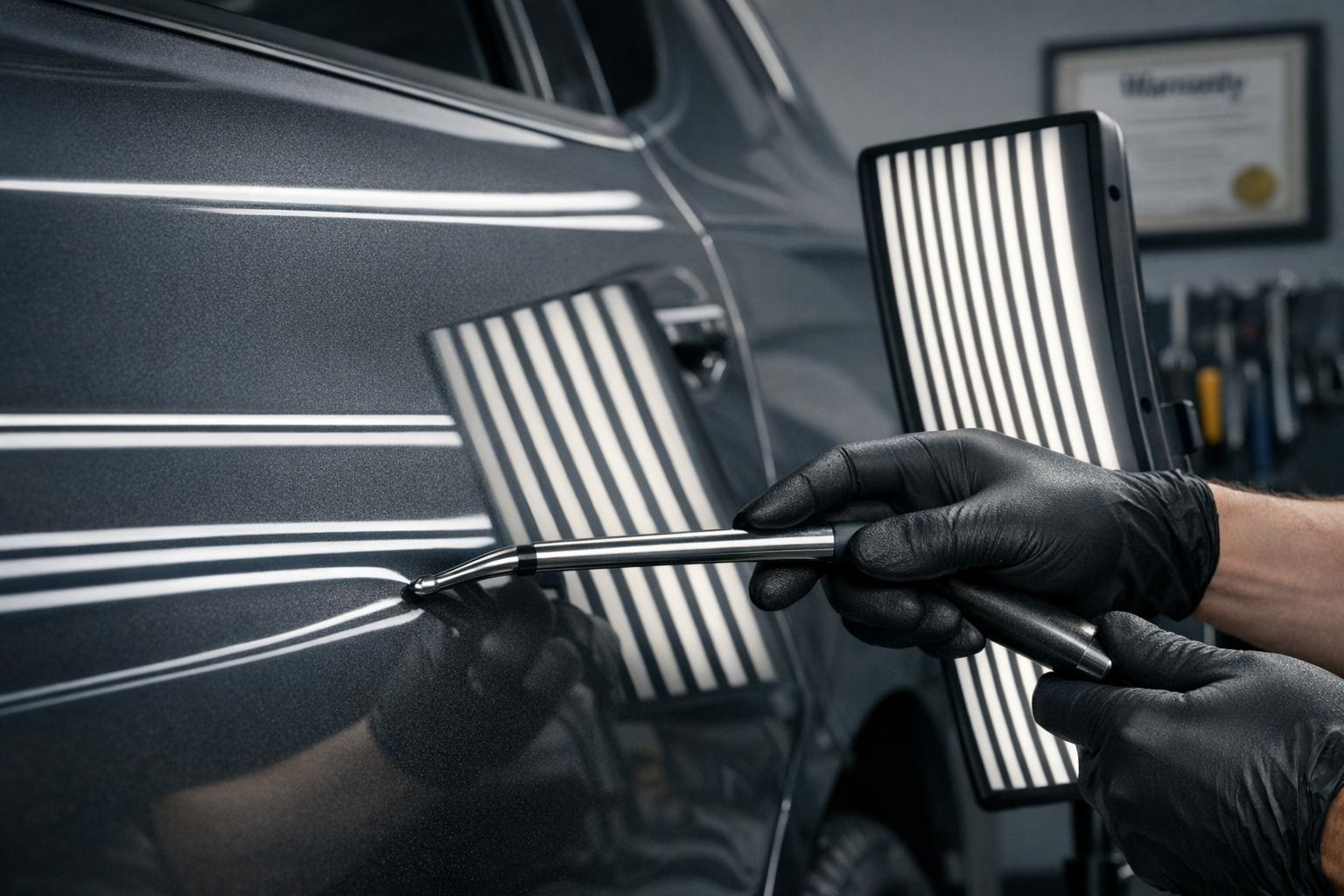
Paintless Dent Repair (PDR) is a specialized method for fixing minor dents without repainting or altering a vehicle’s original factory finish. The quality of PDR depends on several factors, including technician expertise, proper tools, and careful inspection. Here’s what you need to know:
Choosing Dover, TN collision repair experts who follow these standards ensures your vehicle’s value and integrity are maintained.

6 Key Quality Factors in Paintless Dent Repair (PDR)
The skill of the technician plays a huge role in the quality of paintless dent repair (PDR). One certification that stands out in North America is Vale Certification, which is endorsed by the National Association of Paintless Dent Repair Technicians (NAPDRT). Unlike certificates that merely confirm class attendance, Vale Certification involves a rigorous, timed, hands-on test. This test uses digital-optic surface measurement to objectively assess repair quality on both steel and aluminum panels.
"The certification is a timed evaluation of actual paintless dent repair on steel and aluminum panels, using a state-of-the-art, digital-optic surface measurement device. This test is totally unique to the industry as a purely objective, hands-on evaluation." - Vale Training Solutions
Experience is just as critical as certification. Experts suggest that technicians need 3–5 years of dedicated PDR experience to encounter enough damage types and develop sound judgment. Technicians who only perform PDR occasionally won’t maintain the same skill level as full-time specialists. To verify a technician’s credentials, you can check their Vale certification online rather than relying on verbal assurances. Additionally, skilled professionals use high-quality tools designed specifically for precision repairs.
The tools used in PDR can make or break the quality of the repair. Professional-grade tools are crafted from durable materials like stainless steel, aircraft-grade aluminum, and carbon fiber, allowing for precise metal movement. Specialized LED or halogen reflection boards are also critical for detecting even the smallest surface imperfections.
"The equipment and tools used in PDR can have a significant impact on the outcome of the repair. Tools that are either below par or inappropriate for the job can actually cause more damage than they fix." - Kirk's Collision Center
A quality PDR kit typically includes rods of varying lengths and hook tools to access dents in tight spaces without drilling. Tools with interchangeable tips - such as plastic, rubber, or polished steel - enable technicians to adjust to the specific tension and type of metal being repaired. For instance, carbon fiber hail rods are both lightweight and strong, giving technicians better control during extended repair sessions. When paired with proper training, these tools help deliver seamless results.
A thorough pre-repair assessment is essential for determining whether PDR is the right solution. Technicians carefully inspect the paint to ensure it isn’t cracked or chipped; if the finish is compromised, PDR could worsen the damage and isn’t recommended. They also evaluate the metal for signs of stretching or sharp creases that may not return to an invisible finish.
The inspection also identifies whether the panel is made of steel or aluminum, as aluminum requires specific tools and techniques. Technicians plan their approach by utilizing existing openings to access the dent. Be cautious if a technician suggests drilling - this violates industry standards and can weaken the structure, creating potential rust issues within two years.
A trustworthy technician will provide an honest assessment upfront, explaining whether the repair will be completely invisible or if minor imperfections might remain. This transparency ensures realistic expectations and avoids disappointment with the final results.
Creating the right environment is the first step to achieving quality results with PDR. The repair setting plays a huge role in how the metal responds during the process. For instance, maintaining a shop temperature of 75°F helps ensure the metal behaves predictably. When panels are too cold, they act like spring steel - resisting movement and increasing the chance of tool marks.
"A cold panel is spring steel in disguise. Pushing dents when metal is below comfort range invites elastic rebound, shadowing, and tool tracking that will not blend."
Temperature control doesn't just affect the metal; it also safeguards the factory clearcoat. Cold panels are more likely to crack during the pushing process, while overheated panels can become sticky, leaving marks. Humidity also plays a critical role, especially for glue-pull repairs. A relative humidity level between 40% and 60% ensures adhesives perform as expected. High humidity can cause tabs to slip or release early, while dry air can make the glue brittle.
Technicians often rely on tools like infrared thermometers to keep tabs on panel temperatures. In colder months, they allow vehicles to adjust to the shop's ambient conditions before starting repairs. By fine-tuning these environmental factors, technicians set the stage for accurate and effective dent removal.
Once the environment is dialed in, technicians get to work using precise methods to restore the panel's original shape. If the dent is accessible from behind, they use hook tools and PDR rods inserted through existing openings to gently push the metal back into place. For areas where access is limited, glue-pulling methods come into play. Technicians apply specialized adhesive and use tools like lifters or slide hammers to carefully extract the dent.
High-intensity LED or fluorescent lighting is essential for spotting even the smallest imperfections. For the final touches, short-tipped hand tools and precision hammers help refine the panel's shape. These techniques work together to bring the vehicle back to a factory-level appearance while keeping the original paint intact.
Once the dent removal process is complete, the next step is a thorough inspection to ensure everything looks flawless. Technicians carefully examine the repaired area, using various lighting conditions to confirm that the panel's original shape has been perfectly restored. Tools like LED inspection lights, reflective boards, and pattern boards help highlight any shadows or distortions that might not be obvious at first glance.
"After the dent has been successfully removed, the technician will perform a thorough inspection to ensure the repair meets the highest standards. This includes checking the repaired area from different angles and under various lighting conditions to confirm that the dent is completely gone." - Dent Depot Inc
During this process, technicians focus on pinpointing micro-imperfections, such as tiny high spots, low spots, or subtle ripples in the metal. They also check to ensure the factory paint remains intact - looking for signs of cracking, bubbling, or stress marks caused by the repair process. If any small flaws are detected, additional adjustments are made to guarantee a smooth, seamless finish.
"The goal is for the repair to be invisible. This strong attention to detail is a cornerstone of professional cosmetic car repair and one of the reasons paintless repair delivers such impressive results." - Schneider Auto Body & Paint
After passing these rigorous checks, the repair is ready for the customer’s final review.
During the final walk-through, the technician showcases the repaired area under different lighting conditions, pointing out the corrected sections. Pre-repair photos are often used as a reference to highlight the improvements. Customers are encouraged to carefully inspect the work and mention any concerns or inconsistencies they notice. This step ensures the repair meets their expectations and gives them a chance to request any immediate adjustments.
Customer feedback is invaluable - it not only confirms a job well done but also helps technicians refine their skills for future repairs. Before leaving, it’s important to ask for warranty details in writing. Ideally, a lifetime warranty covering defects in materials and workmanship offers peace of mind for the long term.
A solid warranty is a key indicator of quality when it comes to paintless dent repair. It shows the provider's confidence in their craftsmanship and gives you peace of mind with long-term protection.
Always ask for a written and signed warranty after completing a paintless dent repair. Verbal assurances won't help if issues arise later, so keep the warranty document with your vehicle's maintenance records. Make sure it covers both workmanship and materials, ensuring the provider is responsible for addressing any problems that may come up.
Look for warranties with long durations - ideally lifetime coverage - and, if possible, transferable terms. Transferable warranties can help maintain your car's resale value, which is a testament to the provider's confidence in their skill and equipment.
"A strong warranty is a good indicator of a manufacturer's confidence in their product." – Metal Medic PDR Tools
The warranty should also confirm that the repair maintains electronic paint-thickness readings within factory specifications. This way, your vehicle's original finish and the manufacturer's paint and corrosion warranties remain intact. Be sure to review any exclusions - most warranties won’t cover damage from future hail storms, new dents, or unauthorized repairs.
A standout example of this level of commitment is offered by 1st Choice Collision.
1st Choice Collision takes these standards to the next level with its lifetime nationwide guarantee. No matter where you travel or relocate, this warranty ensures that any workmanship-related issues will be addressed for as long as you own your vehicle - without geographic or time restrictions.
The nationwide coverage is especially beneficial for those who frequently move or travel across the U.S. This lifetime protection, paired with their dedication to 100% customer satisfaction, highlights their confidence in their repair techniques, tools, and expertise.
The quality of paintless dent repair (PDR) hinges on several key factors: technicians with 3–5 years of focused experience, the use of professional-grade tools, a controlled repair environment, and thorough post-repair inspections. Tools like specialized LED lighting boards and precision instruments made from durable materials, such as aircraft-grade aluminum or stainless steel, allow for highly detailed work. A controlled shop environment ensures repairs are carried out under optimal conditions, while rigorous inspections ensure the final finish matches factory standards. When evaluating a provider, it's important to verify their credentials through resources like the Vale Training Solutions database, rather than relying solely on verbal assurances. These steps collectively define the high standards expected in the PDR industry.
"Paintless dent repair is only as good as the technician performing it." – DentAdvisor Staff
These industry standards are essential when choosing a provider committed to maintaining your vehicle’s value and integrity. 1st Choice Collision exemplifies these principles by offering a lifetime nationwide guarantee that covers any workmanship-related issues for as long as you own your car. Their services extend beyond PDR to include collision repair, custom auto paint, and mechanical work, ensuring comprehensive care for your vehicle. With state-of-the-art equipment, a controlled repair environment, and a team of highly skilled technicians, 1st Choice Collision is dedicated to protecting your car’s structural integrity and long-term value.
To confirm a PDR technician’s credentials, start by asking about their qualifications and experience. Certification often serves as a reliable sign of their skill in delivering quality repairs. Additionally, you might want to ask about any training programs they’ve completed or whether they’re part of any professional organizations.
Paintless Dent Repair (PDR) typically doesn’t show up on vehicle history reports or paint-thickness tests. Why? Because PDR skips repainting or altering the vehicle’s structure, leaving no visible signs detectable by these methods.
Paintless dent repair doesn’t work well for damage where the paint is cracked or chipped, dents with severe creases or folds, or any structural damage. In these cases, traditional repair methods are usually needed to properly restore the vehicle’s look and structural integrity.